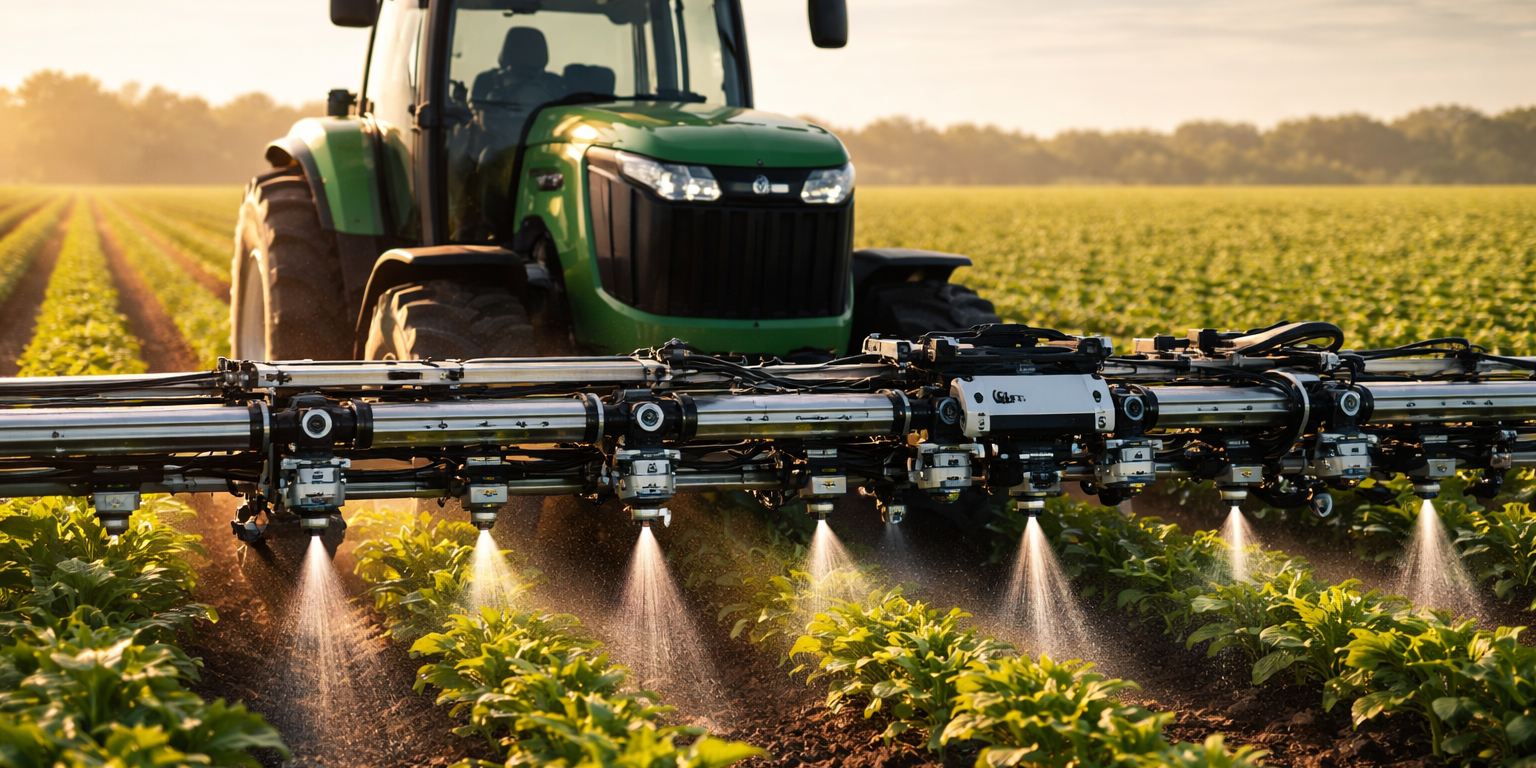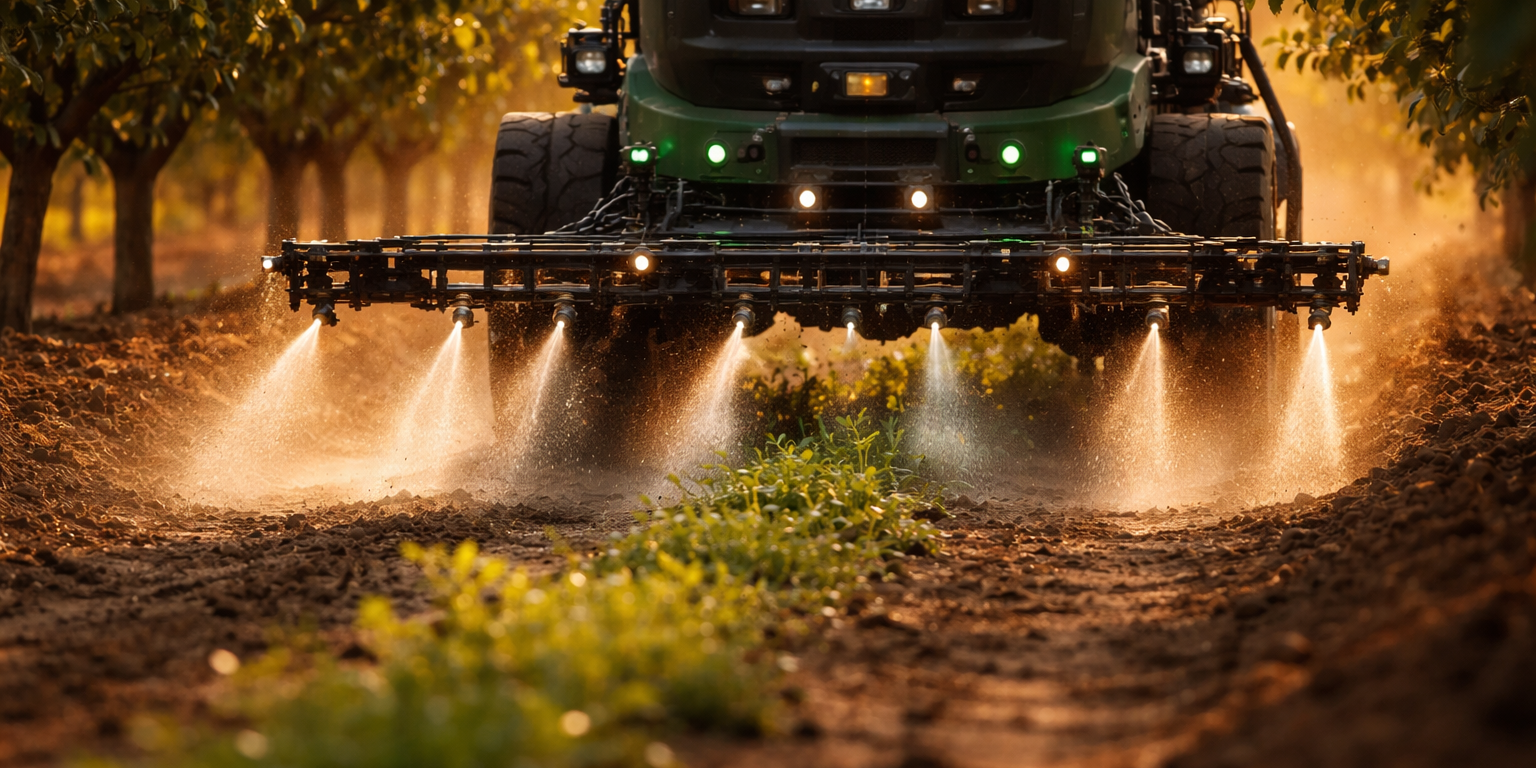

A corn farmer in Iowa using traditional broadcast methods applies roughly 150 pounds of nitrogen per acre each season, saturating the entire field whether every square foot needs it or not. Upside Robotics has built a fleet of solar-powered autonomous robots that navigate those same fields with optical sensors and targeted injection systems, delivering nutrients only where soil analysis indicates deficiency. The company reports fertilizer use drops to 45 pounds per acre with comparable yields—a 70% reduction that translates to roughly $80 saved per acre at current nitrogen prices. The machines operate independently for up to 16 hours on solar charge, require no connection to electrical infrastructure, and eliminate the need for tractor-pulled spreaders or manual spot-treatment crews.
The timing reflects both economic pressure and regulatory tightening. Fertilizer prices spiked dramatically in 2021 following natural gas supply disruptions and remained elevated through 2024, with anhydrous ammonia hovering near $850 per ton compared to $400 in 2019. Simultaneously, the EPA has increased scrutiny on nitrogen runoff, particularly in watersheds feeding the Mississippi River system where excess nutrients fuel hypoxic zones covering thousands of square miles in the Gulf of Mexico each summer. Minnesota and Illinois have both introduced legislation requiring nutrient management plans for operations over 500 acres, creating compliance costs that precision application systems can offset. Upside's technology addresses both problems simultaneously—farmers reduce input purchases while meeting stricter environmental standards. The approach differs from existing variable-rate technology, which typically involves retrofitting John Deere or Case IH equipment with GPS-guided controllers and soil-sampling gear that costs $40,000 to $70,000 per machine. Those systems still rely on human operators and require integration with existing fleet management. Upside's robots operate as standalone units requiring no existing equipment modifications.
The agricultural robotics sector has attracted significant capital over the past three years, with FarmWise raising $45 million in 2022 for autonomous weeders and Verdant Robotics securing $46.5 million in 2023 for multi-function field robots. Most companies have focused on mechanical weeding or crop monitoring rather than chemical application, partly due to regulatory complexity around autonomous pesticide delivery. Fertilizer application occupies a middle ground—heavily regulated but less restricted than herbicides or insecticides. Carbon Robotics has deployed laser-based weeders across more than 80 farms, demonstrating that large-scale autonomous field operations can function reliably outside controlled greenhouse environments. Small Robot Company in the UK has tested per-plant feeding systems for wheat, though commercial uptake remains limited to trial programs. Upside enters a market where the concept has been validated but full-season, multi-hundred-acre deployments remain rare. The company has not disclosed pricing, fleet size, or the number of farms currently operating the systems, leaving questions about manufacturing scale and service infrastructure.
Broader adoption hinges on whether the 70% reduction figure holds across diverse soil types, weather patterns, and crop varieties. Controlled trials often show better results than real-world deployments where equipment malfunctions, software glitches, or unexpected field conditions degrade performance. Corn production spans wildly different environments—from irrigated Nebraska operations on sandy loam to rain-fed Ohio farms with heavy clay—and nutrient requirements vary accordingly. The robots must handle variable terrain, operate reliably through spring mud and summer heat, and deliver consistent application rates across millions of square feet. Solar charging introduces another variable; prolonged cloudy periods in the upper Midwest during planting season could limit operational hours precisely when timing matters most. The technology also must integrate with existing farm management systems that track inputs, yields, and compliance documentation. Farmers increasingly use platforms like Climate FieldView or Granular to manage operations, and standalone systems that don't export data in compatible formats create adoption friction. If Upside's machines can demonstrate reliability through full growing seasons across multiple regions while delivering input savings that cover equipment costs within three years, the technology could shift industry norms around fertilizer application. That remains an open question.
What to Watch: Monitor whether Upside discloses commercial customer counts and total acreage under management by Q3 2025, which would indicate traction beyond pilot programs. Track EPA rulemakings on precision agriculture incentives under the 2024 Farm Bill reauthorization, as federal cost-share programs could accelerate adoption. Watch for independent agronomic studies validating the 70% reduction claim across multiple soil types and weather conditions. FarmWise and Verdant are both expected to announce fertilization capabilities in 2025, creating direct competitive comparisons.