Seven hundred forty-nine dollars. That is what Amazon is asking for the ECOVACS DEEBOT X12 OMNICYCLONE, a robot vacuum and mop that ships free and arrives with a bagless self-empty station. On its face, it is a deal-forum item, the sort of listing that circulates on Slickdeals and disappears when inventory or promotional budgets run out. But premium robot vacuums rarely sell at this level without a reason, and the reason is the story. A flagship-class machine, one built around a cyclonic dust-separation system rather than disposable bags, is now priced where a mid-tier model sat only a couple of years ago.
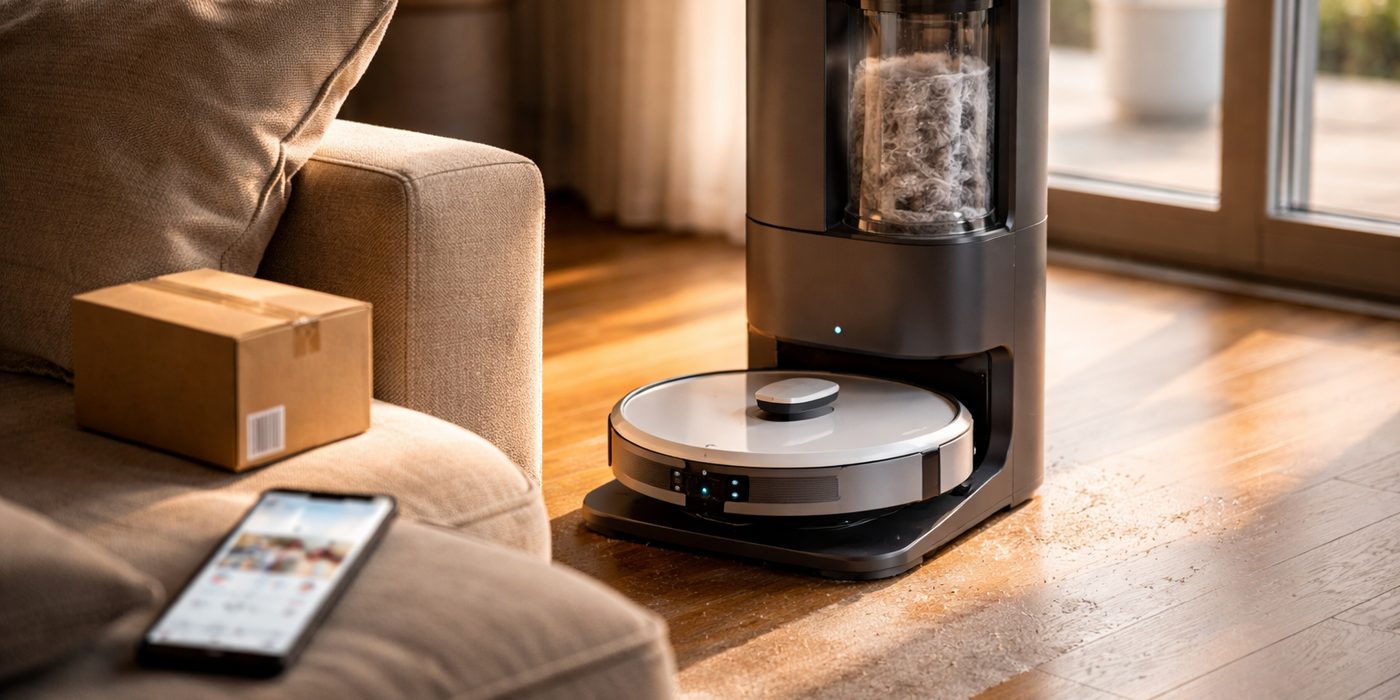
The bagless dock is the detail worth dwelling on. For most of the category's history, self-emptying stations have worked by pulling debris from the robot's bin into a disposable paper bag inside the base, which locks owners into a replacement-bag subscription of sorts. ECOVACS has spent several product generations trying to break that loop. The OMNICYCLONE name points to the mechanism: a cyclonic separation approach in the station that collects dust in a reusable bin instead of a bag. It sounds like a small thing. It is not. Every bag a manufacturer does not sell is a bag the customer does not resent buying, and it removes a friction point that review sites routinely cite when they mark premium docks down on running cost.
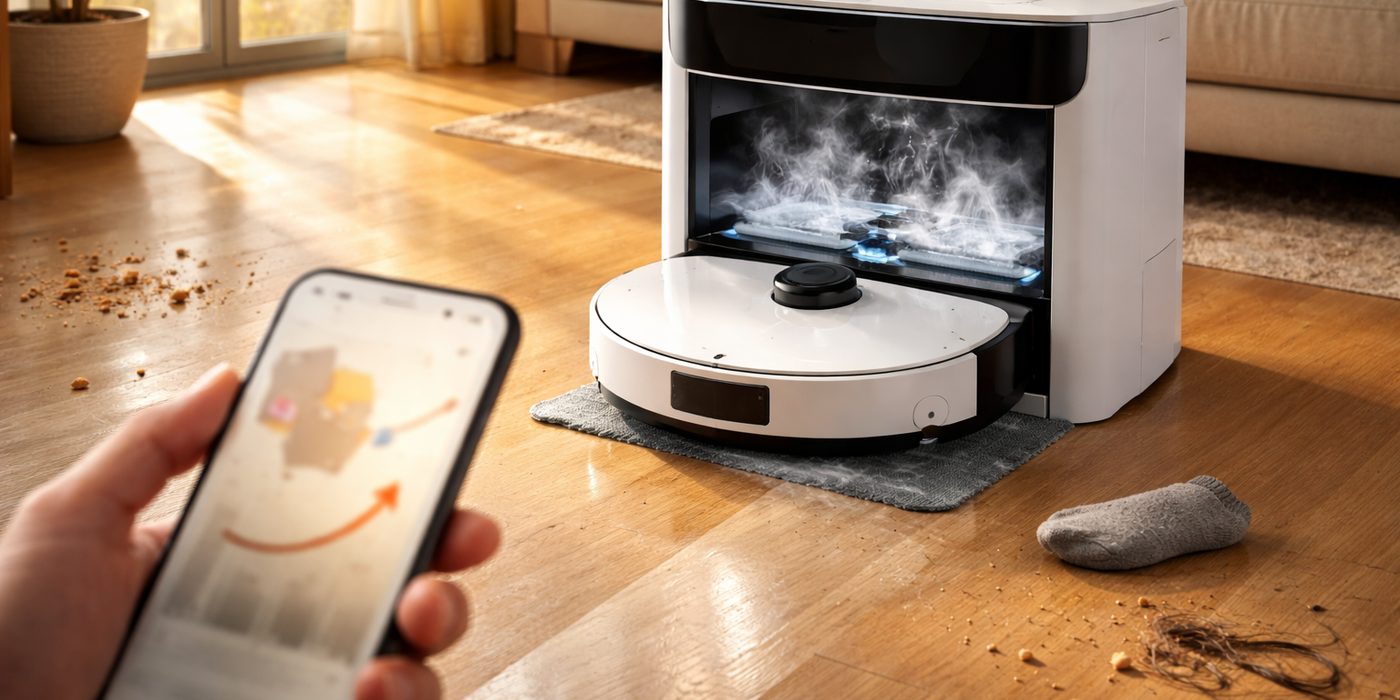
The competitive backdrop explains the price. ECOVACS, headquartered in Suzhou, China, has been locked in a margin-eroding contest with Roborock, Dreame, and Narwal on the Chinese side, and with iRobot's Roomba line and Shark on the American side. Each has pushed the premium tier toward the same feature checklist: AI-assisted obstacle avoidance, hot-water mop washing, automatic mop lifting on carpet, and docks that handle both emptying and water management without human intervention. When feature sets converge, price becomes the lever. The $749 listing suggests the X12 has entered the phase of its lifecycle where the company, or Amazon, is willing to trade margin for share heading into the holiday shopping stretch.
For robotics engineers and investors, the useful signal is not the discount itself but what it reveals about cost structure. A machine that combines a lidar or structured-light navigation stack, a multi-actuator mop assembly, a compressor-driven or fan-driven dock, and an onboard vision processor cannot be sold at this price without substantial bill-of-materials discipline. Sensor and compute costs have fallen steadily, and Chinese manufacturers benefit from dense component supply chains around Shenzhen and the Yangtze River Delta. The broader implication is that capabilities once reserved for four-figure flagships are migrating down the price ladder quickly, compressing the window in which any single brand can charge a premium for a feature. Differentiation is shifting toward software, long-term reliability, and the ownership experience, which is precisely where a bagless dock plays.
What to Watch
Track whether the $749 price holds through Cyber Monday and the December promotional calendar, or whether ECOVACS and rivals Roborock and Dreame push flagship models lower still. Watch for the next-generation DEEBOT announcements that typically surface around CES in early January 2027, where bagless or reduced-consumable docks are likely to become a headline spec across the category. Monitor ECOVACS's quarterly results from its Shenzhen-listed parent for gross margin trends in the service-robot segment, since sustained discounting will show up there first. And keep an eye on iRobot's financial position and product cadence, because price pressure from Chinese competitors at this tier is the central challenge for the company's turnaround.