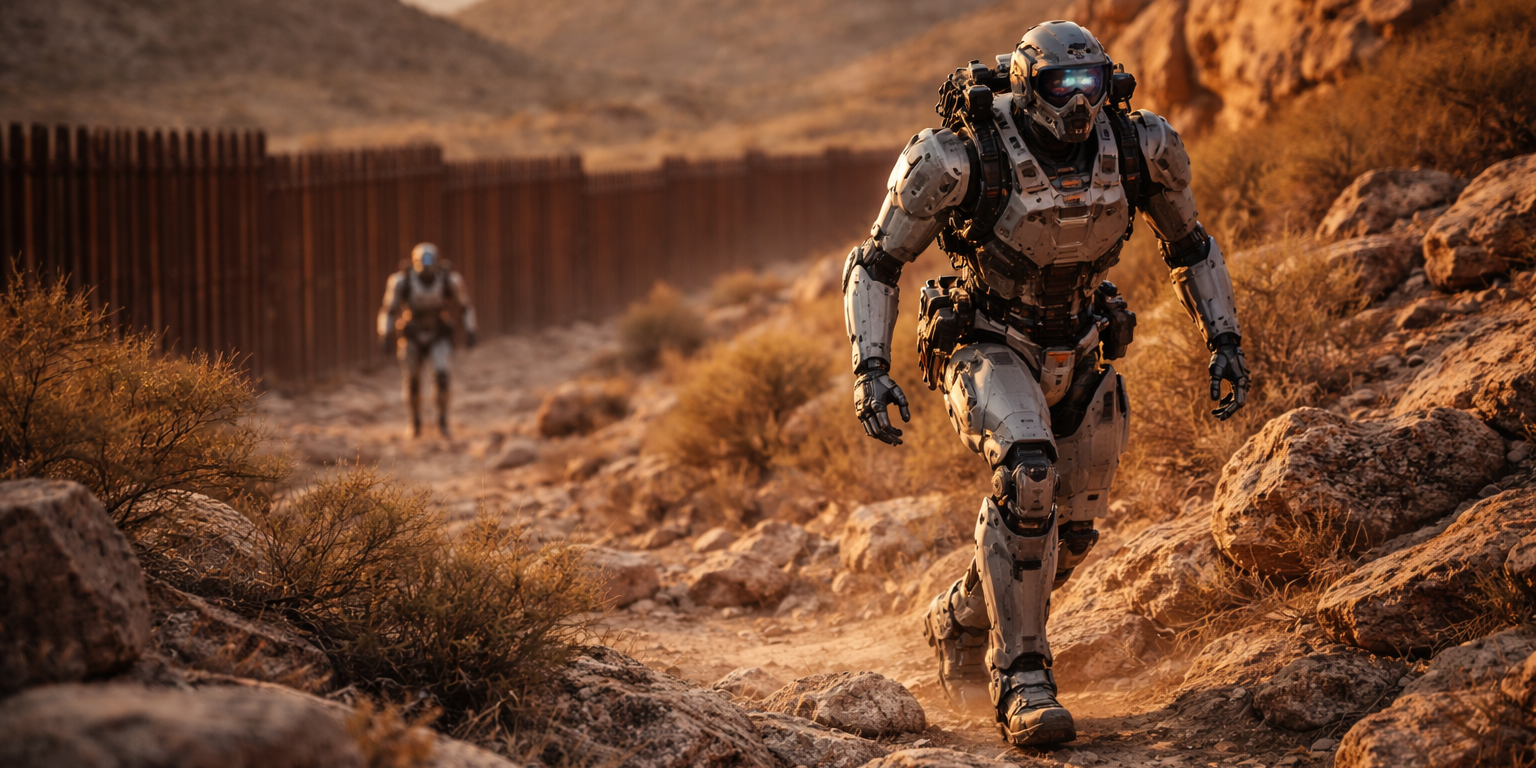
The Department of Homeland Security has begun soliciting proposals from robotics manufacturers for humanoid platforms capable of operating in the rugged terrain along the southern U.S. border, a shift that signals growing frustration with the limitations of wheeled ground vehicles and fixed-wing drones. Customs and Border Protection officials confirmed the initiative in a statement that framed the move as a practical response to operational gaps rather than a wholesale replacement of human personnel. "If drones and watchtowers were able to solve for everything, why do we still have humans at the border?" one CBP program manager told trade press, speaking on condition of anonymity because procurement discussions remain ongoing. The agency has not disclosed budget figures, but industry sources familiar with federal contracting cycles estimate initial pilot deployments could involve 50 to 100 units, with full-scale programs potentially reaching several thousand platforms if trials prove successful.
The request comes as bipedal robotics have matured from laboratory curiosities into fieldable hardware. Boston Dynamics, Figure, Apptronik, and Agility Robotics have all demonstrated sustained outdoor operations with their respective humanoid models over the past two years. Agility's Digit platform already operates in logistics warehouses for customers including Amazon and GXO, though those deployments involve controlled indoor environments with flat surfaces and predictable obstacle patterns. Border terrain presents a different challenge entirely: loose sand, rocky inclines, seasonal flooding, extreme temperature swings, and vegetation that can obscure footing. CBP's requirements document, portions of which circulated among defense contractors in early August, specifies bipedal locomotion precisely because legs can traverse terrain that defeats wheels and tracks. The agency wants platforms capable of sustained patrols lasting six to eight hours, the ability to climb chain-link fences, and sufficient onboard sensing to detect human movement at 200 meters in low-light conditions. Power requirements alone present engineering hurdles that no commercial humanoid has yet solved at scale.
Defense primes including Lockheed Martin, Northrop Grumman, and General Dynamics have participated in early industry days, though none have confirmed whether they will submit bids directly or partner with humanoid specialists. Boston Dynamics has historically declined government contracts involving armed or adversarial applications, a stance that may or may not apply to unarmed surveillance roles. Figure AI, which raised $675 million in a Series B round earlier this year at a $3.2 billion valuation, has not commented publicly on whether its Figure 02 platform meets the agency's environmental durability standards. Apptronik's Apollo, designed primarily for warehouse and manufacturing tasks, would require significant hardening for desert conditions. Sanctuary AI and 1X Technologies, both developing humanoids with advanced teleoperation capabilities, remain unproven in outdoor endurance scenarios. The most likely path involves partnerships: an established defense contractor bidding as prime, with a humanoid robotics firm providing the underlying platform, and a third-party systems integrator handling sensors, communications, and edge AI processing.
The broader question is whether CBP's procurement signals a tipping point for humanoid adoption in roles beyond manufacturing. Logistics and warehousing have absorbed hundreds of bipedal robots over the past 18 months because the return on investment is straightforward: reduced labor costs, fewer workplace injuries, and 24-hour operations. Border patrol introduces variables that warehouses do not. Public perception of robotic enforcement carries political risk. Maintenance and repair in remote desert locations will be expensive and slow. Training human agents to work alongside humanoid units requires doctrine that does not yet exist. But the agency's willingness to explore the technology reflects a calculation that current tools are insufficient. Aerial drones provide surveillance but cannot pursue individuals on foot through dense brush. Ground vehicles are confined to roads and flat hardpan. Watchtowers are static. Human agents, meanwhile, face injury rates from desert heat, wildlife, and difficult terrain that cost CBP millions annually in workers' compensation claims. Humanoids, in theory, split the difference: mobile enough to navigate complex ground, tireless enough for extended patrols, and expendable enough that sending one into a ravine or across a flash flood zone does not risk a life.
What to Watch: CBP is expected to announce formal request-for-proposal timelines before the end of September 2026, with bid submissions likely due in early 2027. Track whether Boston Dynamics reverses its stance on government applications or whether Figure AI and Apptronik pursue partnerships with traditional defense contractors. Also monitor any legislative pushback from privacy advocates or border-state lawmakers; public comment periods on procurement decisions could delay deployment timelines into 2028 if opposition gains traction. Finally, watch for parallel initiatives from other DHS components such as the Coast Guard or Federal Protective Service, both of which have similar terrain and endurance challenges.