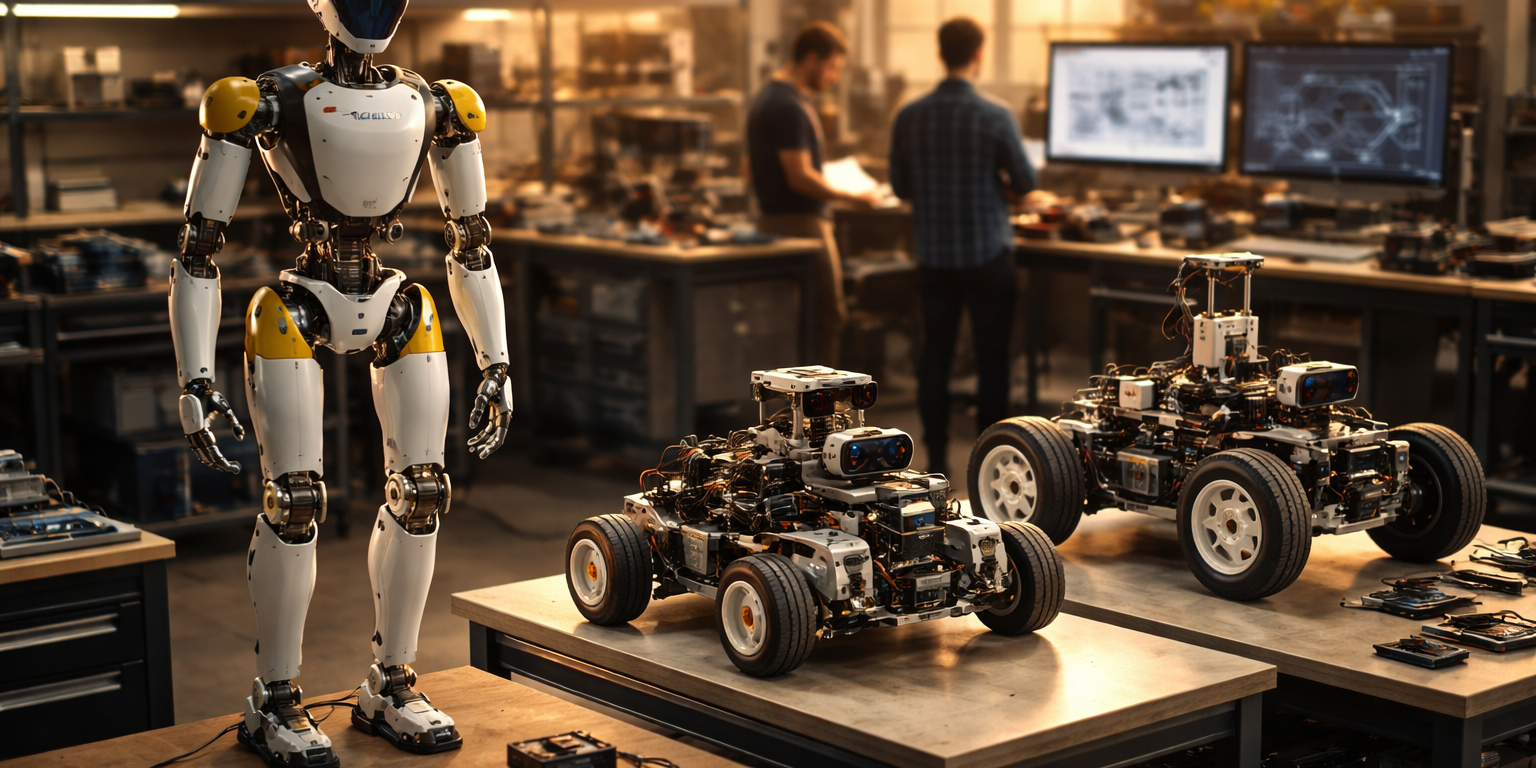
Agility Robotics, which has shipped hundreds of its bipedal Digit robots to warehouse customers over the past eighteen months, now confirms it is actively exploring wheeled robot designs as part of a broader platform strategy. The Corvallis, Oregon company built its reputation on developing stable bipedal locomotion for unstructured environments, but executives now acknowledge that legs are not optimal for every application the company targets. The exploration suggests Agility is betting on a portfolio approach rather than the single-humanoid-solves-everything narrative that has dominated robotics funding pitches since 2023. Co-founder and CTO Jonathan Hurst has repeatedly emphasized that form factor should follow function, and the company's internal engineering teams are now applying that philosophy across multiple mechanical architectures. Agility operates a 70,000-square-foot manufacturing facility capable of producing more than 10,000 robots annually, infrastructure that could support multiple product lines without major retooling.
The company has not disclosed specific wheeled designs under development or timelines for commercial release. However, the acknowledgment comes as Agility faces intensifying competition in the logistics automation market from both wheeled autonomous mobile robots and rival humanoid developers. Boston Dynamics, Figure AI, Apptronik, and Sanctuary AI have all secured significant logistics pilot programs in the past year, while traditional AMR suppliers like Locus Robotics and Fetch Robotics continue to expand their installed base with proven wheeled platforms. Agility's core advantage has been Digit's ability to navigate stairs, uneven surfaces, and environments designed for human workers without infrastructure modification. But that capability comes with trade-offs in speed, payload capacity, and energy efficiency compared to wheeled alternatives on flat warehouse floors. A wheeled robot from Agility could target high-volume horizontal transport tasks where bipedal locomotion offers little practical benefit, potentially opening new customer segments that prioritize throughput over versatility. The company has raised more than $150 million in venture funding from investors including DCVC, Playground Global, and Amazon's Industrial Innovation Fund, which participated in a $150 million Series B announced in 2023.
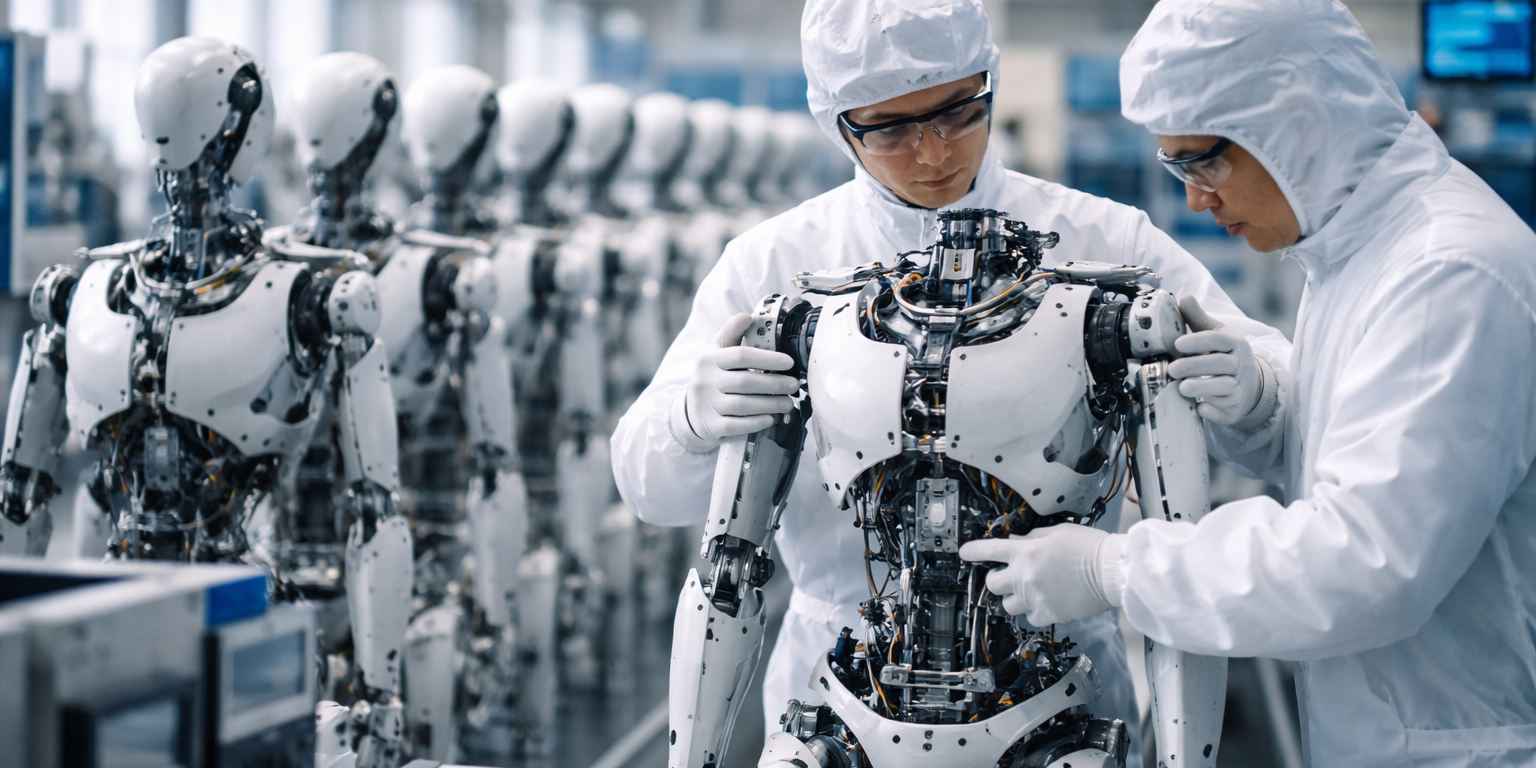
Agility currently operates the largest humanoid robot factory in North America, a facility that began production in Salem, Oregon in late 2023 and reached full operational capacity in early 2025. The company has publicly confirmed deployments with Amazon, GXO Logistics, and Spanx, with Digit units performing tote handling, box stacking, and trailer unloading tasks. Amazon's initial trial deployment involved multiple Digit robots working in a fulfillment center outside Seattle, where the machines moved empty totes from conveyors to storage racks. GXO, one of the world's largest contract logistics providers, has tested Digit units at multiple North American facilities for case picking and pallet building applications. These commercial deployments provide Agility with operational data that could inform both humanoid improvements and alternative form factor development. The company's software stack, which handles perception, manipulation planning, and fleet orchestration, is designed to be hardware-agnostic at the application layer. Engineers familiar with Agility's architecture have noted that separating high-level task planning from low-level motion control would simplify the process of supporting multiple robot morphologies from a single software platform. That architectural decision, made years before the current form factor discussion, now positions Agility to deploy wheeled and legged robots with shared autonomy infrastructure.
The broader robotics industry has increasingly questioned the humanoid-as-universal-platform assumption that drove hundreds of millions in investment during 2023 and 2024. While humanoid form factors offer theoretical advantages in navigating human-built environments, they introduce mechanical complexity, higher manufacturing costs, and energy penalties that may not be justified for many industrial tasks. Warehouses with flat floors, wide aisles, and standardized infrastructure can be served effectively by wheeled robots that move faster, carry heavier loads, and operate longer on a single charge. Several venture investors who backed early humanoid companies have privately acknowledged that task-specific morphologies will likely dominate near-term deployments, with humanoids reserved for applications where their unique capabilities provide clear ROI advantages. Agility's willingness to explore wheeled designs suggests the company agrees with that assessment and prefers to capture market share across multiple form factors rather than defend a single technological approach. Tesla's Optimus program has similarly indicated it will develop specialized end-effectors and mobility configurations for different factory applications, rather than relying solely on a general-purpose bipedal platform. The question for Agility becomes whether entering the wheeled robot market requires competing directly with established AMR suppliers who have years of commercial deployment experience and extensive customer relationships, or whether the company can identify underserved niches where its control algorithms and fleet management software provide differentiation even on conventional wheeled platforms.
What to Watch: Agility will likely reveal more specifics about alternative form factors at industry conferences in late 2026 or early 2027, with Modex 2027 in Atlanta a probable venue for any commercial announcements. Monitor whether the company's next funding round, expected sometime in 2027, values the business as a humanoid specialist or a multi-platform robotics company, which would significantly affect valuation multiples. Watch for patent filings related to wheeled chassis designs or hybrid mobility systems that could signal the technical direction Agility is pursuing. GXO Logistics, Agility's most prominent logistics partner, may provide the first commercial deployment site for any new wheeled platform given the relationship established through Digit trials.